Revitalising Scrum: How to Fix Stagnant Processes
Make Scrum Great Again: 10 Key Takeaways From The Updated 2020 Scrum Guide
The Scrum Framework turns 25 this year. To celebrate, Ken Schwaber and Dr Jeff Sutherland updated the Scrum Guide with a launch on the 18 November 2020. You might have missed this session on Zoom at 1am Australian time. They talked about the history of Scrum, and what their goals are with the new release. This was followed by workshops on Driving Focus and how the updates impact your scrum.
If you don’t have 2 hours to listen to the briefing, here are my top 10 takeaways:
- It is less prescriptive, “lightweight…purposefully incomplete, only defining the parts required”. With the details removed the guide aims to be clearer, more flexible with more focus on leadership and creativity.
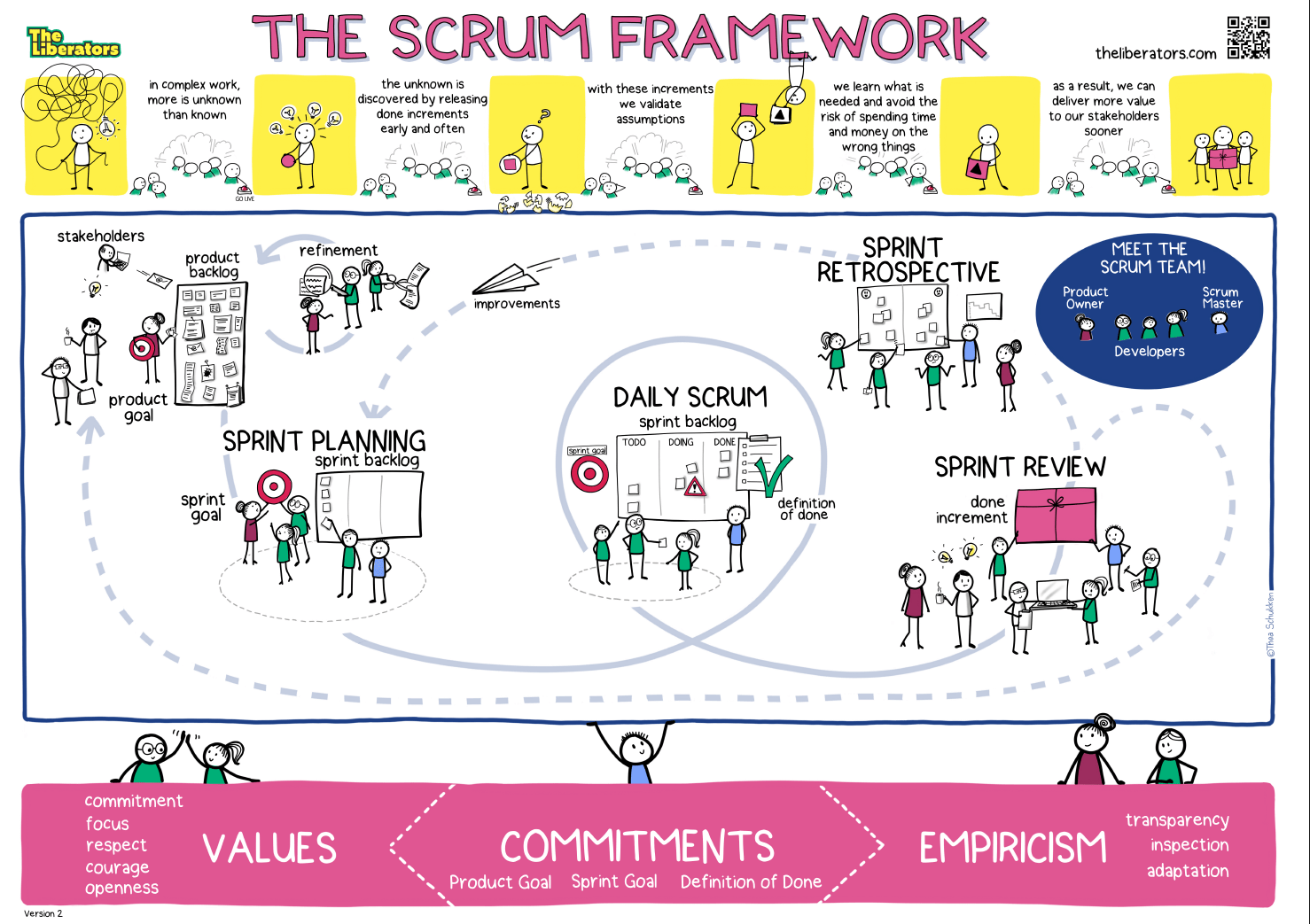
- One team. Previously the development team was described as a sub-team inside the Scrum team, this distinction has been removed. As a result, there is no more us/them, “no sub-teams or hierarchies”. There is just one team which includes accountabilities of “one Scrum Master, one Product Owner, and Developers”.
- Product Goal - a new and mandatory part of the Product Backlog is to “make sure people are using Scrum to get somewhere…to actually deliver something”.
- Emphasising Sprint Goal, Definition of Done, and Product Goal – these are now mandatory “commitments” to the artifacts, which increases transparency and focus.
- Self-organising is now self-managing, “meaning they internally decide who does what, when, and how”.
- Sprint Planning – why is this Sprint valuable? Finalisation of the Sprint Goal is added to the existing topics “what can be done?” and “how will the chosen work get done?”.
- Simpler, shorter, more inclusive, non-technical. The new guide is more welcoming in non-software development contexts.
- The moment a Product Backlog item meets the Definition of Done, an Increment is born – enabling multiple releases to production per sprint at the delivery of each story.
- “Agility is not the solution to your problems, agility is how you solve problems”.
- “Scrum hasn't changed, we're just getting the description better”.
Posting this summary up to our company slack stirred up some lively comments from our Product Owners, Developers and Scrum experts. Most of this conversation centred on the new Product Goal and its relationship to Product Vision and Strategy, which led to the headline “Product Goal: Make product great again”.
The 2017 Scrum Guide was still pretty great, but as Scrum.org CEO Dave West says on the launch video “They’ve gone back to their roots, and it’s awesome”. They’ve also recognised that most organisations are speeding up their clock cycle times, releasing more frequently, and the guide recognises this, which is great to see.
If you’re interested in Making your Scrum Practice Great Again, we recommend adopting the 2020 Scrum Guide. We are available to offer briefings to your organisation about these practices and coaching on how to embed the subtle nuances of the changes.
More information can be found at:
2020 Scrum Guide at
https://www.scrumguides.org/scrum-guide.html
YouTube:
https://www.youtube.com/watch?v=Dfxo3PZwDI8