SERVICES · MODERNISATION
Enterprise App Modernisation & Legacy Migration
79% of app modernisation projects fail. Ours don't.
Of the $22.7 billion organisations spent on modernisation in 2025, roughly $18 billion was wasted, mostly on big bang rewrites that never landed. We work the other way: agentic AI and the Strangler Fig pattern, modernising legacy systems incrementally. Cloud-smart, sovereign-ready, and materially faster than the maths you've been quoted.
RECENT MODERNISATION OUTCOMES
Each of these was estimated as a multi-year, multi-million-dollar program under traditional approaches. Agentic AI changed the maths.
REGIONAL BANK MAINFRAME
$15M quoted,
$800K delivered.
RPG on iSeries, rebuilt in 3 months: $500K in labour, $300K in tokens, 94% below the original estimate. Started by one developer with agentic tooling.
MOBILE REPLATFORM
Six apps in eight weeks, fully agentic.
Six apps in eight weeks, fully agentic. Every screen and core feature built in the first fortnight, UAT by week six. The same client's first rescue, a year earlier in AI-augmented mode, shipped its MVP in two weeks.
ENTERPRISE SAP UNWIND
$75,000 and three months to add one field.
That was our Tier 1 utility client's SAP reality. They're now shrinking SAP back to finance and payroll only, edge by edge, with no big bang.
What app modernisation actually is
Developers have a natural tendency to want to rewrite legacy systems from scratch, by hand. That means doing 80% of the work just to get back to where you started, and losing the accumulated business wisdom along the way.
In this clip, Joe Cooney explains why true modernisation isn't about starting over; it's about evolving the intricate business logic already built into your code. Agentic AI changes what "evolving" can mean: agents read the legacy logic and carry it into a modern stack, so a rewrite is now a translation of that wisdom rather than a blank page.
The high cost of doing nothing
"If it ain't broke, don't fix it" is a dangerous strategy in 2026.
SECURITY EXPOSURE
Old frameworks are prime targets for cyberattacks, and end-of-life stacks stop receiving patches entirely.
THE TALENT GAP
Top engineers won't work on 15-year-old spaghetti code, and the people who still understand it are retiring.
FROZEN VELOCITY
Every new feature breaks three old ones, making release cycles painfully slow. One client paid $75,000 and waited three months for a single field.
Our modernisation approach
The Strangler Fig pattern, finished this time
We peel functionality off the legacy system piece by piece, rebuilding it as modern services while the old system keeps running. The pattern is 20 years old; what's new is that you can actually finish it. Historically, teams migrated a few edges, ran out of budget, and stopped, leaving the original monolith plus a half-built replacement nobody wanted to own. When edge replacements take days instead of quarters, the economics hold to the end. Traffic routes back instantly if anything misbehaves, so the risk stays carried while the core shrinks.
Agentic AI, matched to your risk profile
We adapt the mode to the work. AI augmentation for complex core business logic: a senior engineer accelerated by AI, reviewing every line. Fully agentic delivery for scale: hundreds of agents running in parallel, producing in hours what traditionally took months, directed by engineers who own every merge. The mainframe rebuild above ran this way. Whether the work needs precision or volume, the architecture and the review discipline are the same.
Cloud Smart re-architecture
We move you off expensive on-premise servers or expensive public cloud, depending on which is actually costing you. Containerisation makes the application infrastructure-agnostic, so you can deploy to AWS today and repatriate to a sovereign private cloud tomorrow without changing a line of code. You own the architecture, not the vendor.
Your Path to Modernisation
A structured process with flexible execution.
01
The forensic audit
We start by scanning your repository to map dependencies, identify dead code, and flag security vulnerabilities. We don't guess; we produce a forensic state-of-play report that separates critical technical debt from functional code, so we know exactly what needs fixing before we touch a single line of logic. If you want this step on its own before committing to anything, that's our
fixed-price code review →: the same forensic baseline, yours to act on with or without us.
02
Strategy selection
Based on the audit, we select the migration pattern that fits your risk appetite and timeline. We don't force a single method. For critical systems, we might use the Strangler Fig pattern to peel off modules gradually. For urgent timelines, we might choose a vertical slice to prove value fast, or a cloud re-platform to exit on-premise infrastructure quickly.
03
The foundation build (Sprint 0)
Before we migrate a single user, we build the landing zone in Sprint 0. We set up the cloud infrastructure and CI/CD pipelines so automation is there from day one. Crucially, we generate synthetic datasets, allowing us to test the new system rigorously without ever exposing your live production data to risk.
04
Execution & Cutover
Finally, we execute the selected strategy. Whether it's a gradual rollout or a specific cutover window, we manage the traffic routing to keep the business running. We typically run the new system in parallel with the old one (blue/green deployment), verifying performance in production before fully decommissioning the legacy assets.
Modernisation in action
From reporting platforms to portals, we deliver enterprise systems that serve hundreds of thousands of users securely at scale.
Microservices re-architecture
We re-architected a microservices solution within a large enterprise program of work after the existing system failed to scale. Built on Kafka with bounded contexts and ACLs, the new architecture ingests telemetry from around 100,000 constantly streaming devices, delivering resilience and performance at scale.
Portal modernisation
We engineered a major upgrade to a business-critical education application, migrating from an older .NET version to .NET 7 and shifting the UI from AngularJS to React. These changes halved CPU usage, enabled cross-platform capability, and roughly doubled development velocity through modern frameworks and hot-reloading.
App re-platform
We delivered four apps across iOS and Android as part of a re-platform modernisation. The incumbent team were upgrading from Xamarin to MAUI with little success. Our recommendation was to rebuild using AI augmentation for React Native, delivering the MVP for the apps
in just two weeks →.
Engineering rigour
We don't trade quality for velocity. We use established frameworks so our output is engineering-ready.
ISO 27001 SECURITY
Why: compliance. How: we ensure the new system meets strict sovereign security standards.
SYNTHETIC DATA
Why: privacy. How: we use AI to generate fake-but-realistic data for testing, so we never have to touch your real production PII.
DEVSECOPS
Why: automation. How: we build automated pipelines (CI/CD) so you can deploy changes in minutes, not days.
BRIEF YOUR EXECUTIVE TEAM
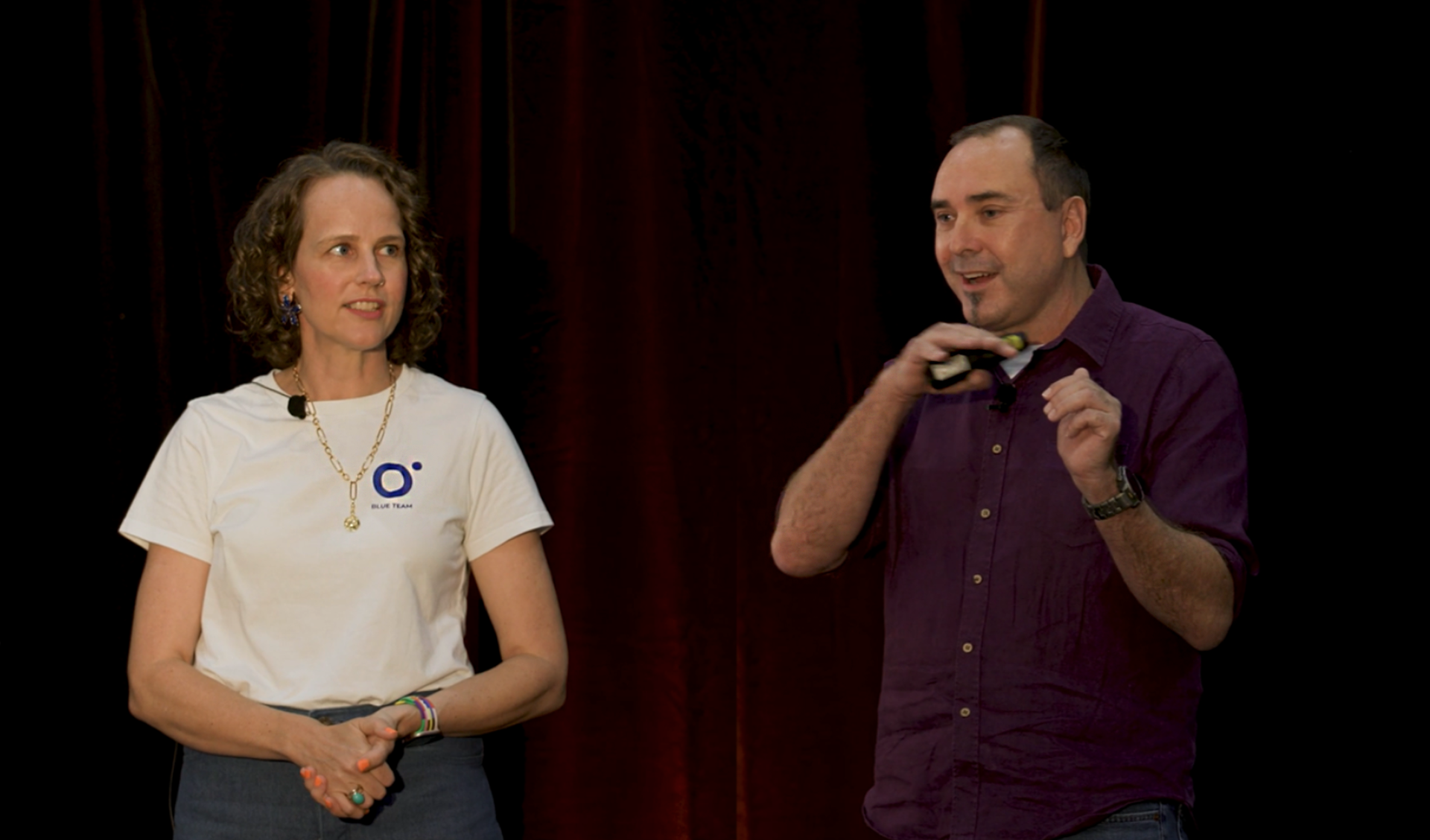
We brief boards and executive teams for free, with the material we take to stages like the Gartner IT Symposium: what agentic AI is doing to cost, sovereignty and team shape. No pitch, no slides about us. Request a briefing →
Latest Insights

Talk to a Co-CEO
One conversation, and you'll know whether we can help. No handover to a sales team.
- Programme already stalled? Project Rescue & Vendor Transition →
- Want the capability, not just the outcome? AI & Agentic Delivery →
FAQs
Should we refactor the old code or just rewrite it?
In the era of agentic AI, a rewrite is often the safer, cheaper option. The old logic: rewriting by hand was dangerous because it took too long and you risked losing the business logic, so refactoring was the only safe path. The new reality: agentic AI has crashed the cost of writing code. We deploy agents to read your legacy logic and rewrite it in a modern stack, carrying the business wisdom across, faster than a human could untangle the old spaghetti. The benefit: you don't just get cleaner legacy code; you get a fresh start. Decades of technical debt gone, on a sovereign, modern platform, without the multi-year big bang risk.
How do I decide between AI augmentation and agentic AI for my project?
It comes down to risk versus velocity. Choose AI augmentation for complex, core business logic: a senior human engineer uses AI tools to accelerate their work while reviewing every line. Choose fully agentic delivery for high-volume work like migrating syntax, generating unit tests, or building isolated internal tools: agents autonomously plan and execute under human direction, with hundreds running in parallel, producing in hours what traditionally took a team months. The $15M-quoted mainframe migration above was delivered this way for $800K.
If you use agentic AI to build this, will my internal support team be able to maintain it?
Yes. In fact, it is often cleaner than human legacy code. Textbook consistency: agents don't take shortcuts, and they strictly adhere to your internal coding standards, producing uniform, predictable code. Hyper-documentation: agents don't just code, they document, so expect comprehensive specs and inline comments that make handovers seamless. Zero lock-in: we deliver standard, open repositories, not black boxes, that your team can read, own, and extend immediately using their existing tools.
"Cloud First" was the standard. Why are you recommending "Cloud Smart"?
It comes down to economics and sovereignty. The economics: for predictable, high-volume workloads, the public cloud is often the most expensive option. We help you identify the cloud tax, bloated egress fees and always-on compute, and repatriate those workloads to private infrastructure or bare metal where they cost a fraction to run. The strategy: Cloud Smart means being infrastructure-agnostic. We containerise your applications so you can deploy to AWS for scale today, but move to a sovereign private cloud tomorrow without rewriting code. You own the architecture, not the vendor.
Can you migrate our data?
Yes. Data migration is often the hardest part. We build automated ETL pipelines to move your data from legacy SQL or mainframe systems to modern cloud data warehouses, with integrity verified at every stage.
Will the system be down during migration?
Ideally, never. Using the Strangler Fig pattern, we run the new system alongside the old one, routing traffic across gradually. If something breaks, we route traffic back instantly. This blue/green deployment strategy keeps the business running throughout.
Should we rebuild instead of renewing our SaaS contract?
Sometimes, and the calculation has genuinely flipped for a meaningful slice of the market. The traditional vendor pitch was that you'd never have to build a thing, but every business customises, so you were really buying a starting point and locking yourself in. Agentic AI has crashed the cost of building bespoke: we've replaced our own DocuSign subscription with a version we built and run ourselves, and we're looking at our CRM the same way. If your renewal is coming up and the licence bill is large, it's worth costing the alternative before you sign.