When Can I Replace My Software Developers with AI? (Spoiler: You Can’t)
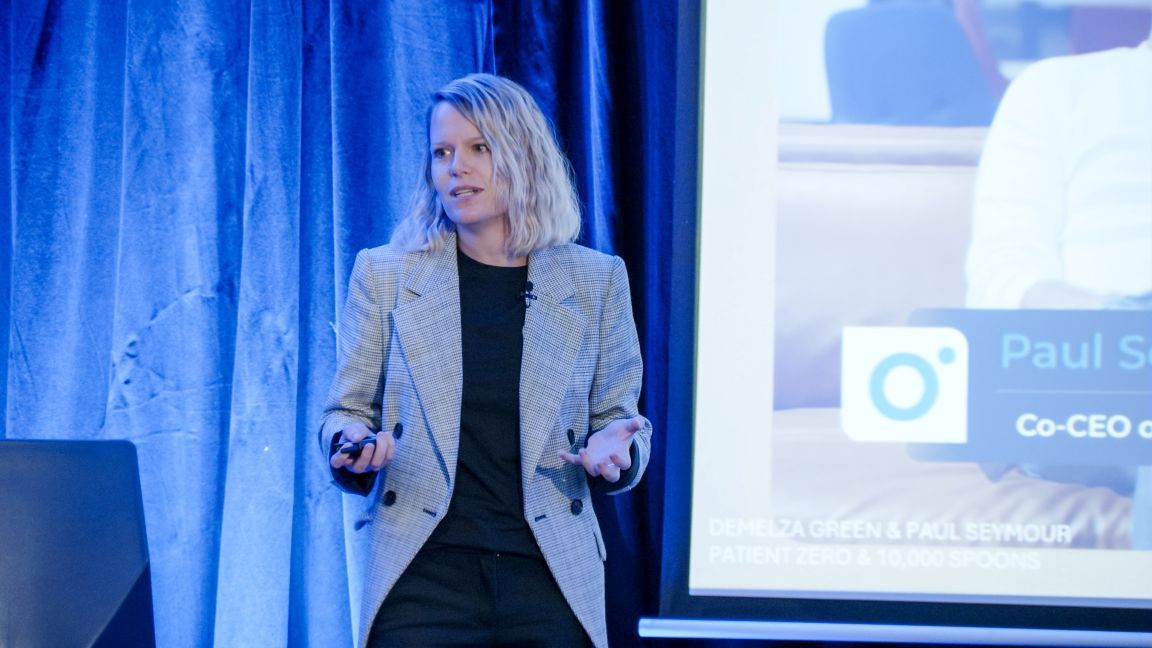
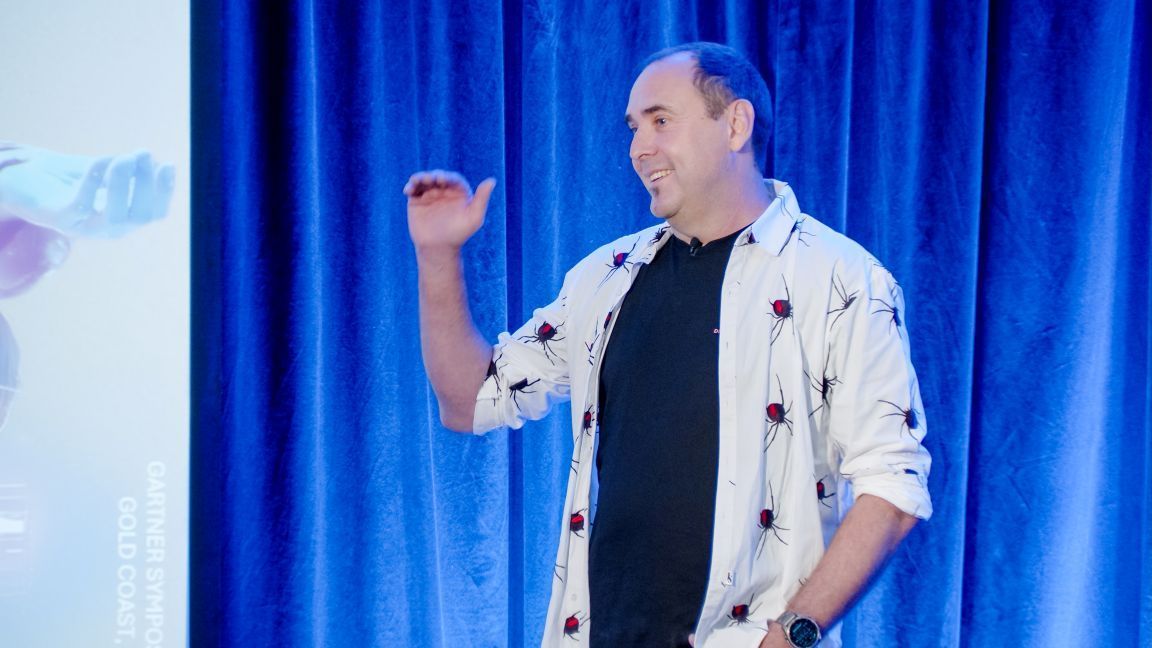
At the recent Gartner IT Symposium, our Co-CEOs Demelza Green and Paul Seymour took the stage to answer the question on every CFO’s mind: "When can I replace my software developers with AI?"
The short answer? You can’t. The long answer? You can’t, but you can build a significantly faster, more dangerous competitor if you stop treating AI as a replacement and start treating it as an accelerant for Talent Density.
Here is the reality check from the front lines of enterprise software.
Key Highlights
AI is an Accelerator, Not a Replacement: AI speeds up "Flow State" for senior engineers but creates chaos for juniors. Replacing experts with AI leads to a "Sorcerer's Apprentice" disaster.
Writing is Not the Bottleneck:
Developers spend only 10–20% of their time writing code; the rest is spent understanding it. AI speeds up the typing but increases the "review tax," often resulting in zero net velocity gain.
The "Vibe Coding" Trap:
Using AI without deep engineering knowledge creates technical debt at hyperspeed. Recent data shows developers spend 67% more time debugging AI-generated code.
Fix Your Foundations First: Most organisations can achieve 300% performance gains simply by removing bureaucratic gates and improving CI/CD, before even touching AI.
The New Cost of Talent: The engineers who can wield AI effectively are the top 1%. They will cost more, not less, because they provide exponential value.
1. Beware the Hype Machine
The first step to sanity is filtering your inputs. The industry is currently awash with "AI Hype Machines"; vendors and influencers claiming that AI will write 90% of code by next year or that you can fire your junior engineers today.
Be careful who you listen to. Most of these claims come from people selling the shovels, not the ones digging the holes. In the reality of complex enterprise environments, where security, legacy integration, and sovereignty matter, these "magic button" promises fall apart. We need to move from "Peak Hype" to "Peak Engineering."

2. The "Sorcerer's Apprentice" Problem
When you do apply AI, the reality is closer to the Sorcerer's Apprentice.
AI is a form of magic. In the hands of a Master (a Senior Engineer), it automates drudgery and accelerates "Flow State." But in the hands of an Apprentice (a Junior without guidance), it creates chaos.
The Metric: 45% Failure Rate
In a recent junior intake, 45% of candidates with high GPAs couldn't explain the code they submitted because they let AI write it for them.
The Risk: The "Vibe Coding" Trap
Bad code is still bad code. The Harness (2025) "State of Software Delivery" report found that developers spend 67% more time debugging AI-generated code compared to human-written code. If you replace your experts with bots, you aren't building software; you're building technical debt at hyperspeed.
3. The Efficiency Illusion: Writing Faster ≠ Delivering Faster
The hype assumes that if an AI generates code 50% faster, you get 50% more software. But this math fails because it misunderstands what a developer actually does.
The "Reading" Ratio
Developers typically spend only 10–20% of their time writing new code. The vast majority of their time is spent reading, debugging, and understanding existing code.
The Trap? AI accelerates the easy part (typing syntax) but often complicates the hard part (understanding logic). If an AI generates a complex block of code in seconds that takes a human 2 hours to audit and integrate, you haven't saved time, you've just shifted the cost from "creation" to "review."
The Burnout Factor & "Taking Time Back"
We also need to talk about the human cost. Recent industry reports show developer burnout is at an all-time high.
The "Coffee" Calculation: If AI saves a developer 18 minutes between each task, our observation is that they aren't using that time to write more code. They are using it to grab a coffee, reduce cognitive load, or simply "take their time back" to avoid burnout.
The reality is that time "saved" is often absorbed by the increased cognitive load of reviewing AI-generated code. So, the net gain to the business isn't "2x Features", it's often just a slightly less stressed developer (which is good!) or a coffee break (which is neutral).
4. Why AI is Just the "New Stack Overflow" (For Now)
Right now, most enterprise developers are only using AI as a "better Google" or a "New Stack Overflow."Why aren't they using it for complex agentic workflows?"
We found that the true blockers aren't in the software itself, but in the organisational cultures that surround it.
The Blocker: Enterprise Fear
It’s not just laziness; it’s fear.
Organisations are terrified of IP leakage and "Shadow AI," so they block tools or wrap them in so much red tape that they become useless. However, this creates a dangerous "Shadow Reality": when you block safe tools, developers inevitably turn to unsafe ones on their personal devices to get the job done. The result is that you aren't actually stopping the risk; you are just losing visibility of it.
The Capability & Time Gap
Even when tools are available, there is no education. We expect developers to magically intuit how to become "Prompt Engineers" in the 5 minutes between sprint tasks, but you cannot master a paradigm-shifting technology without dedicated time. If your team is 100% utilised on feature delivery, they have 0% capacity to learn how to move faster, creating a permanent "Time Trap" that stalls adoption.
The Solution: Permission to Play
You must create safe spaces for experimentation. We found that running internal Hackathons and "Prompt Injection" challenges moved our teams from "Existential Dread" to "Tool Mastery" because it gave them permission to break things and fail safely. This shift is critical; it turns fear into curiosity and transforms AI from a threat into a tool.
5. You Can Get 3x Performance Without AI
Before you spend millions on AI, look at your foundations. In our session, we highlighted that most organisations can achieve a 300% performance improvement simply by fixing the basics that they ignore.
The Bureaucracy Bottleneck
If you layer AI on top of a broken process, you just get "Bad Faster." The real blockers to velocity are rarely typing speed; they are bureaucratic approval gates, slow CI/CD pipelines, unclear requirements, and low-trust environments.
The "Strike Team" Fix
The solution is to remove the friction. In our recent "Strike Team" case study, the client removed the gates because the deadline was critical. The result was a full MVP delivered in two weeks. The speed came primarily from the process change; the AI just helped us run.
6. Hiring the Top 1% (The New Cost of Talent)
If AI raises the ceiling, it also raises the floor. The engineers who can effectively wield these tools, the ones who can architect systems and audit the AI's output, are no longer just "Senior Developers." They are the Top 10% of the Top 1%.
The New Talent Economics
The reality is that these people will cost more, not less. Because they can effectively do the work of three "standard" developers by leveraging AI correctly, their value is exponential.
The Death of Standard Hiring Tests
How do you hire them? You can't use standard coding tests anymore. You need to pivot to testing System Design, Critical Thinking, and AI Collaboration.
The "Co-Pilot" Test
The new verification method is simple: give them a problem, give them an AI, and watch how they use it. Do they trust it blindly? Or do they treat it like a junior partner that needs supervision? That distinction is the difference between a Master and an Apprentice.
The Verdict: Augmentation, Not Replacement
The future isn't about firing your team. It's about investing in Talent Density. It's about hiring engineers who understand the principles of code, not just the syntax, so they can direct the AI rather than be fooled by it.
Watch the full talk below to see:
- Why "Vibe Coding" is dangerous for Enterprise.
- The math behind why LLMs won't reach 100% accuracy anytime soon.
- The real-world case study of a "Zero to MVP" build in just two weeks.
Fix Your Engineering Strategy
The future isn't about firing your team; it's about investing in Talent Density. Whether you need to rescue a stalled project or inject high-performance DNA into your team, we provide the sovereign capability to get it done.
- App Modernisation: See how we rescue legacy systems from technical debt.
- Embedded Teams: Hire the people who know how to wield AI.
- Co-CEO Series:
Watch what happens when AI becomes your fourth Co-CEO.