CASE STUDY
Brisbane Catholic Education (BCE)
About Brisbane Catholic
Education
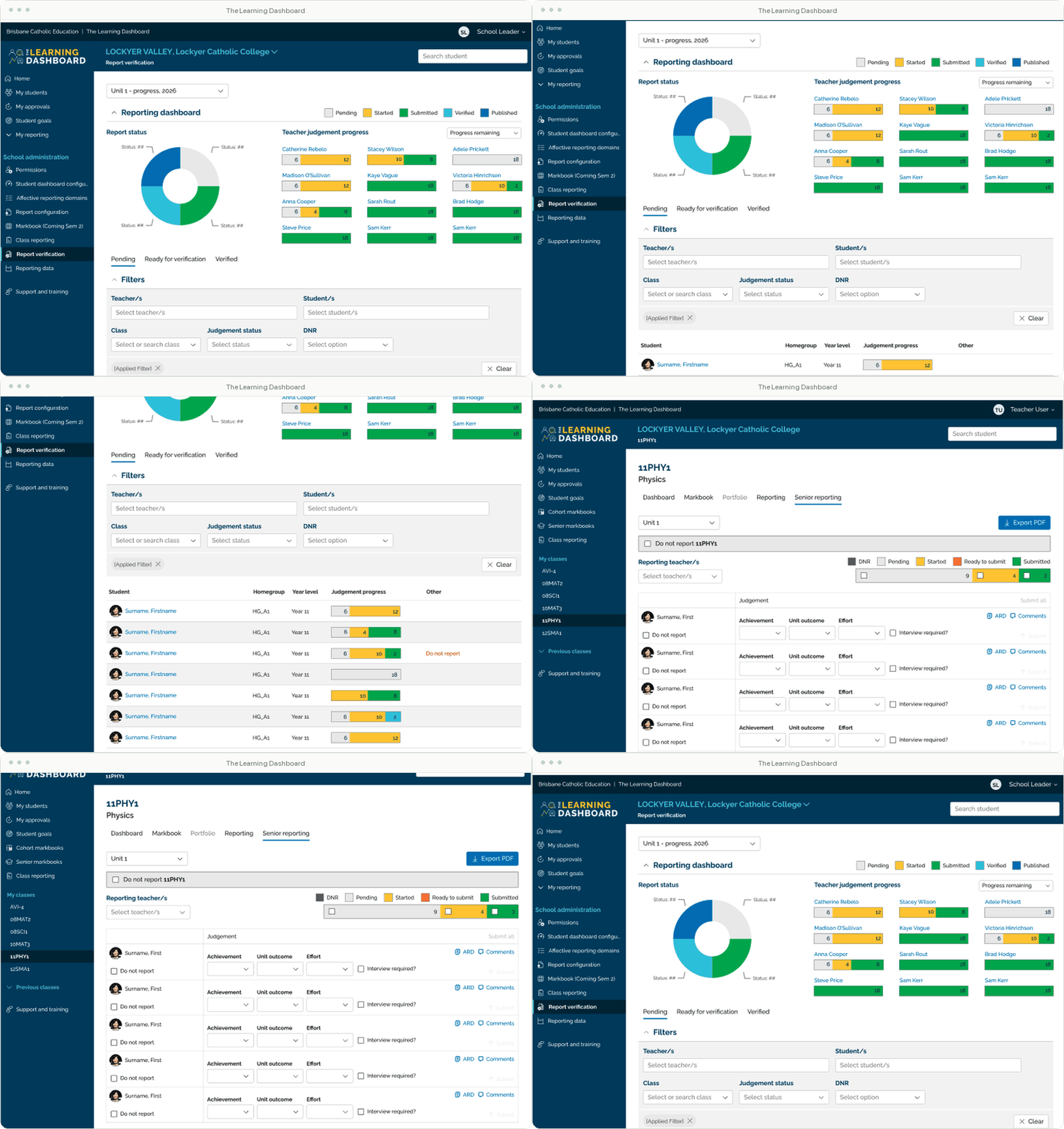
Brisbane Catholic Education operates a centralised IT Department supporting 142 schools, 11,500 employees and 75,000 students. Historically they have needed to write their own applications and technology solutions, as many off the shelf technologies simply cannot cope with the scale of their requirements.
“The ability of Patient Zero to deliver quality outcomes each and every sprint, has enabled the business to progress projects rapidly and provide educators with the ability to personalise student support.”
-
Graeme Ford, Team Leader - Education Systems - Information Services
Digital, Automated and Transferrable Personalised Support Plans for Students with Disabilities …. A First
for Catholic Education
Brisbane Catholic Education (BCE) wanted to digitise and automate the process for identifying and responding to the educational needs of students with disabilities. They were looking to improve the usability and features of their current solution which was outdated, manual and time consuming.
The goal was to transform it into a digital solution to improve student learning outcomes. By partnering with Patient Zero they have been able to achieve significant results.
The Challenge
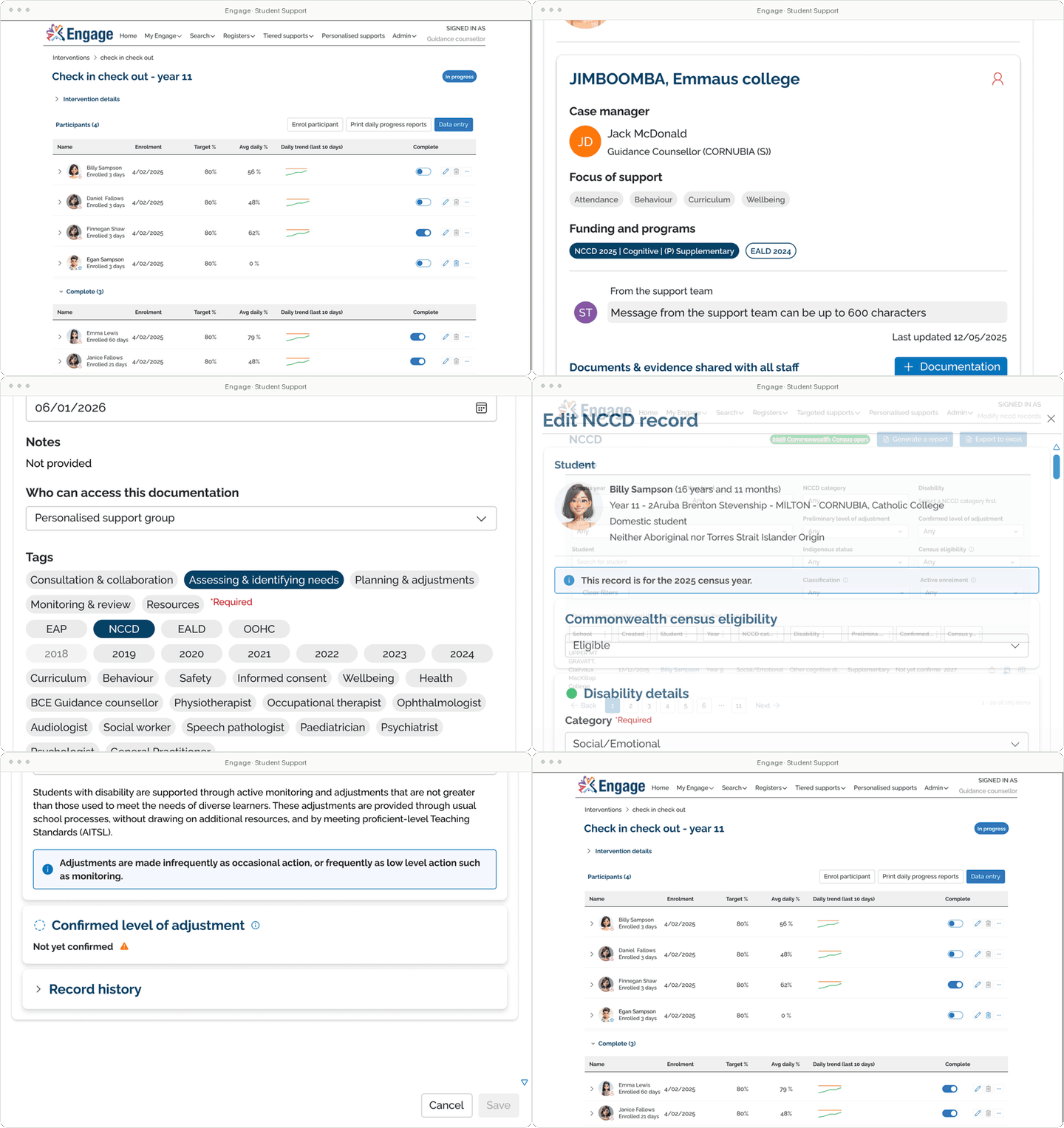
“Engage” is a solution designed to capture critical data around supporting students with behavioural and learning difficulties. The Queensland government supports students with disabilities who require significant education adjustments via the Education Adjustment Program (EAP). The challenges of the EAP project centered around digitising a largely paper based EAP process and upgrading the technology in order to achieve a seamless user experience.
Patient Zero’s Approach
Patient Zero offers a unique approach to software development services. Our engagement model is to bring a high-performance, cross-functional, software development team with an end to end Agile delivery model. Our teams incorporate all the skills needed to deliver an entire solution. Team composition and familiarity of working together allows our teams, from the outset, to deliver exceptional results and value.
High Performing Hybrid Team
Patient Zero and BCE worked together demonstrating an exceptional example of a high performing hybrid team. A hybrid team utilises a fully cross functional Patient Zero delivery team coupled with SME’s from BCE to deliver a series of agile sprints.
“In the past my attention has been divided between working with a development team and working with our end users. This dual focus reduced the volume of development I could support and resulted in 4-6 week User Acceptance Test Cycles.
I always felt I needed to spend more time engaging with my end users, to ensure the requirements were right and to upskill them for upcoming releases. With the Patient Zero team, they take care of the detailed requirements and the automated testing improves quality.
We have managed to reduce our UAT cycles by half, and I finally have the time to really focus on that engagement with my end users, which improves product quality.”
-
Sandy Armsden, Senior Service Management Officer -
School Information Services
Fixed Price Sprints
The fixed priced sprint approach provided BCE with additional benefits over more traditional T&M approaches such as:
- Working software every sprint
- Ability to Measure Value against Costs
- Higher throughput of new features
End to End Sprint
Based Delivery
As a fully cross functional delivery team Patient Zero were able to take responsibility for delivering an end to end solution, allowing BCE to focus on engaging with business stakeholders on strategic activities. The Patient Zero team defines detailed requirements for BCE to review, writes high quality code and automated tests. This results in an end to end speed and quality improvement.
Showcases
At the end of each Sprint Patient Zero would give a live demonstration in a deployed environment to the BCE stakeholders - a Sprint Review meeting.
These provided a useful checkpoint and to drive the focussed completion of demonstrable work and to prompt valuable feedback from stakeholders.
Delivery Governance
BytakingBCE’s initial ideas and turning them into a detailed set of estimated user stories it allowed BCE to prioritise for value. The consistently increasing velocity experienced over of the life of the project allowed BCE to confidently plan for up coming releases. Patient Zero worked closely with BCE to perform critical Product Management activities including roadmap and discoveries which helped align both IT and Business stakeholders around priority resulting in a stable stream of work.
At the start of each 2 week sprint a sprint plan was defined and endorsed by BCE. By holding daily stand-ups together, having open and frequent communication the joint hybrid team were able to collaboratively resolve issues
Joint technical decisions were made by the hybrid team rather than in isolation, ensuring continued alignment to BCE’s technology roadmap and quality outcomes.
Automated testing was introduced over the course of the project which compounded into a speed and quality boost. The project delivered a larger scope than BCE were used to and to a higher quality standard. BCE were able to halve their UAT cycle.
“The Governance practices that Patient Zero employs is one of the things which initially attracted me to work with Patient Zero it really puts BCE into the driver's seat and gives us back control.
We can measure the value of each sprint. It aligns BCE and Patient Zero to the same objectives: delivering working software with quality!”
-
Jeff Peters, Information Systems Manager
The Benefits
The digitisation of the process has removed the previous email-based process which lost the digital audit trail of changes due to the manual steps involved. This will be a significant improvement when dealing with auditors in the future. The automation of the workflow will forward the transparency and speed up the process of collecting information for students requiring support.
Personalised student support plans can now be shared and managed with ease, which drives improved outcomes for students.
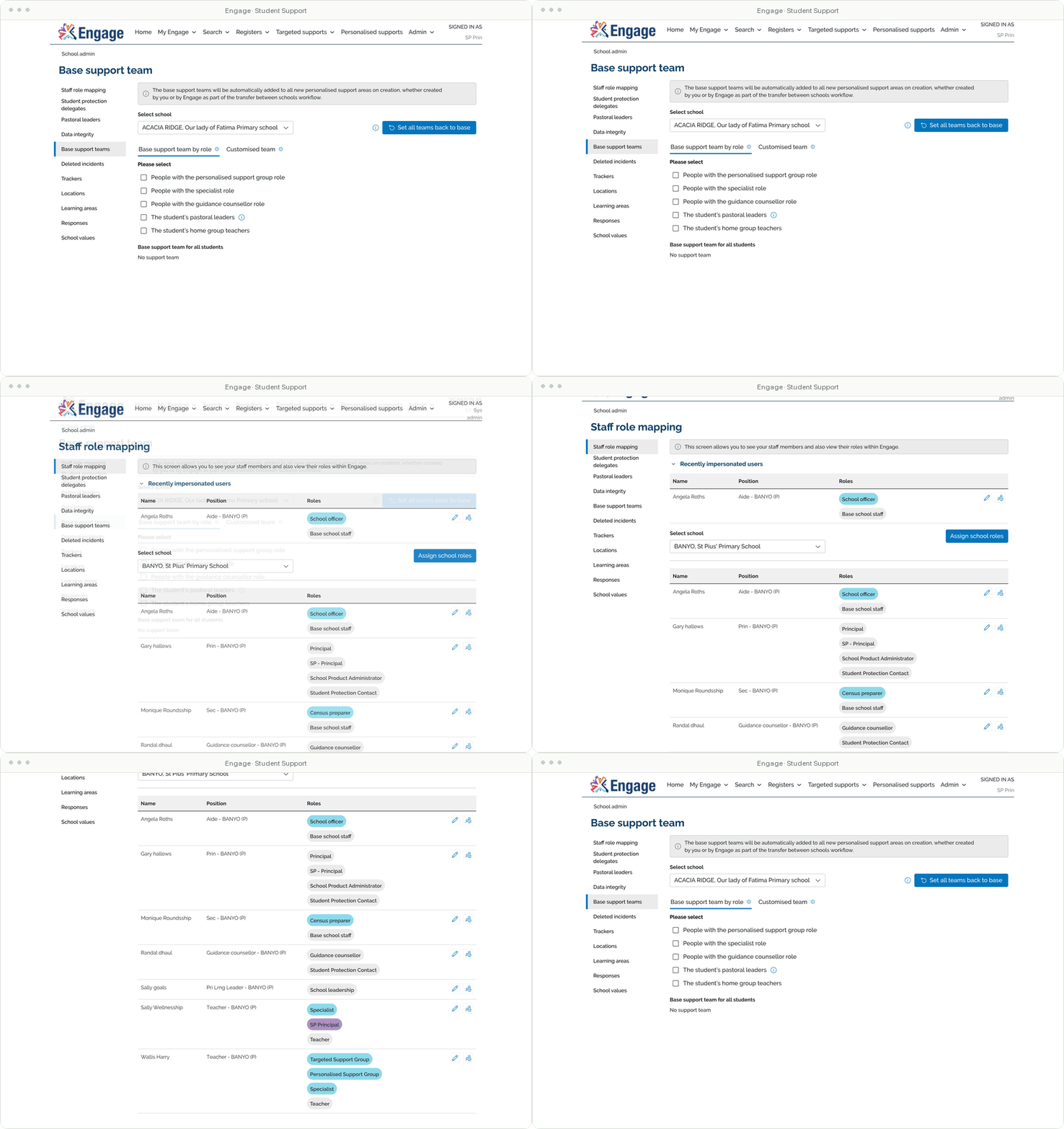
The new EAP solution allows for the transfer of student data between schools, meaning a students history will transition with them, further improving the students learning outcomes, and reducing the workload on educators.
Educators are now able to build effective plans and track their progress to delivering them. This not only delivers a more personalised outcome for the student but also reduces the administration overhead on the educator.
At a recent review meeting with the staff who will be most impacted by this process, one of the staff had some significantly encouraging things to say about the solution. “I have been waiting for this solution for a long time, and now it is finally here!”.
The engagement between Patient Zero and BCE has resulted in renewed confidence in the business to deliver IT solutions, which over the scale of the BCE environment can have a huge impact.