The Retreat of Globalisation: Key Takeaways from Indo Pac 2025
EDITOR'S NOTE
Why is a software engineering company at a Maritime Defence conference? Because in 2026, you cannot separate "Kinetic Capability" (Ships) from "Digital Capability" (Code). Whether it is a frigate or a fintech platform, the risks are the same: if you rely on a "black box" form offshore, you don't own your future. Dan reports from the intersection of Defence and Digital.
The Executive Summary (TL;DR)
- The Context: Indo Pac 2025 confirmed that the era of "Just-in-Time" global supply chains is dead.
- The Shift: The focus has moved from Efficiency to Resilience. AUKUS and the Quad are driving a massive push for onshore capability.
- The Tech Reality: "Sovereignty" isn't just about building ships; it's about owning the software and IP that runs them.
- The Trap: Quantum is coming, but it’s not a strategy yet. Don’t let the hype distract you from the immediate need to secure your supply chain today.
What is Indo Pacific?
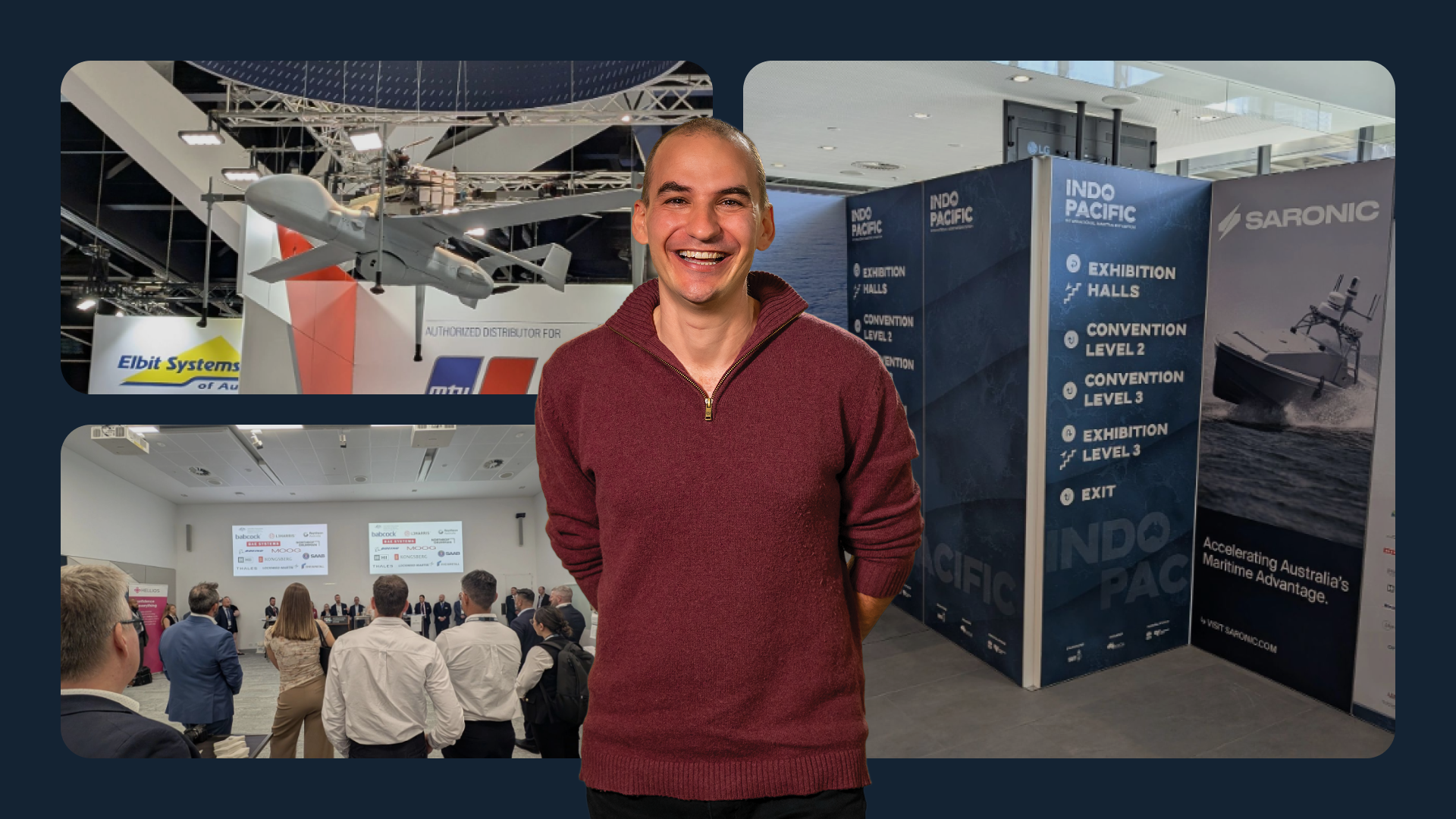
Held in Sydney, Indo Pacific is the premier International Maritime Exposition for the Indo-Pacific region. It is not just a trade show; it is the strategic pulse check for the Royal Australian Navy and its international partners. It brings together Defence Chiefs, Industry Leaders, and Tech Innovators to define how we protect the region's sea lanes and sovereignty.
The Report: Strength at Sea, Sovereignty on Shore
The Indo-Pacific Defence Conference is over, but the real work is just starting. If the conversations in Sydney confirmed one thing, it is that the region is changing faster than our supply chains can keep up.
Here is the deep dive on the three signals that matter most.
1. Maritime is Everything
The theme was "Strength at Sea," and for good reason. Trade routes are contested, and tensions are rising. Recent naval drills in the Tasman Sea (Feb 2025) were a stark reminder that our isolation is no longer a guarantee of safety.
Australia has a long-standing alliance with the US, and despite the shifting political climate, the strategic logic holds firm. AUKUS and the QUAD are central to keeping sea lanes open. Operationally, this is where the attention, and the funding is flowing. We are, after all, an island nation. If the boats stop, the country stops.
2. The Death of "Just-in-Time"
One of the brutal lessons of the COVID-19 era was the fragility of the global supply chain. We watched entire industries stall because a single component for a laptop or a car was stuck in a port halfway across the world.
Indo Pac confirmed that Globalisation is retreating. The efficiencies gained by "Just-in-Time" freight have been replaced by the necessity of "Just-in-Case." In a deglobalised world with less secure maritime routes, we face a binary choice: we either continue to gamble on foreign supply chains, or we start producing critical assets onshore.
This isn't just about manufacturing; it’s about Digital Sovereignty. Imagine a reality where you can’t buy the hardware you need, or the software you rely on is switched off remotely. Now ask yourself: How does your business survive that?
3. The Quantum Question
Everyone is talking about it. The promise of Quantum computing to revolutionise Cryptography, Sensors, and Stealth is undeniable. Even the Australian government has announced significant investment in a local Quantum startup founded by four Australian professors.
But the question remains:
How long before we can actually use it on an industrial scale?
The Strategic Verdict: A Decoupled Future
The investment is real, and strategic knowledge-sharing agreements like AUKUS Pillar 2 recognise its potential. But the practical applications are still years away. Do not let the hype blind you to the scalability issues. We are moving toward a decoupled world.
If we don’t own the innovation pipeline here at home, we lose the strategic advantage, but we must build what works today while we wait for the quantum leap of tomorrow.
Deepen Your Sovereign Capability
Don't just watch the supply chain shift, prepare for it.
- The Solution: Build secure, onshore platforms with Sovereign Software Development
- The Team: Stop renting offshore dependencies and start building internal muscle with Embedded Teams
- The Action: Ready to decouple your digital supply chain? Contact Us
About the Author: Dan Dekel

Dan Dekel is one of the founders and Co-CEOs of Patient Zero. Passionate about software engineering and AI practices, he bridges the gap between complex architectural theory and the gritty reality of shipping production software.
He believes that true sovereignty requires us to be builders, not just consumers, of technology.
Share This Post
Get In Touch
Recent Posts