Patient Zero Keynote at Digital Health Festival 2026 | Notes from the Frontier: Modernising Systems with Agentic AI
EDITOR'S NOTE
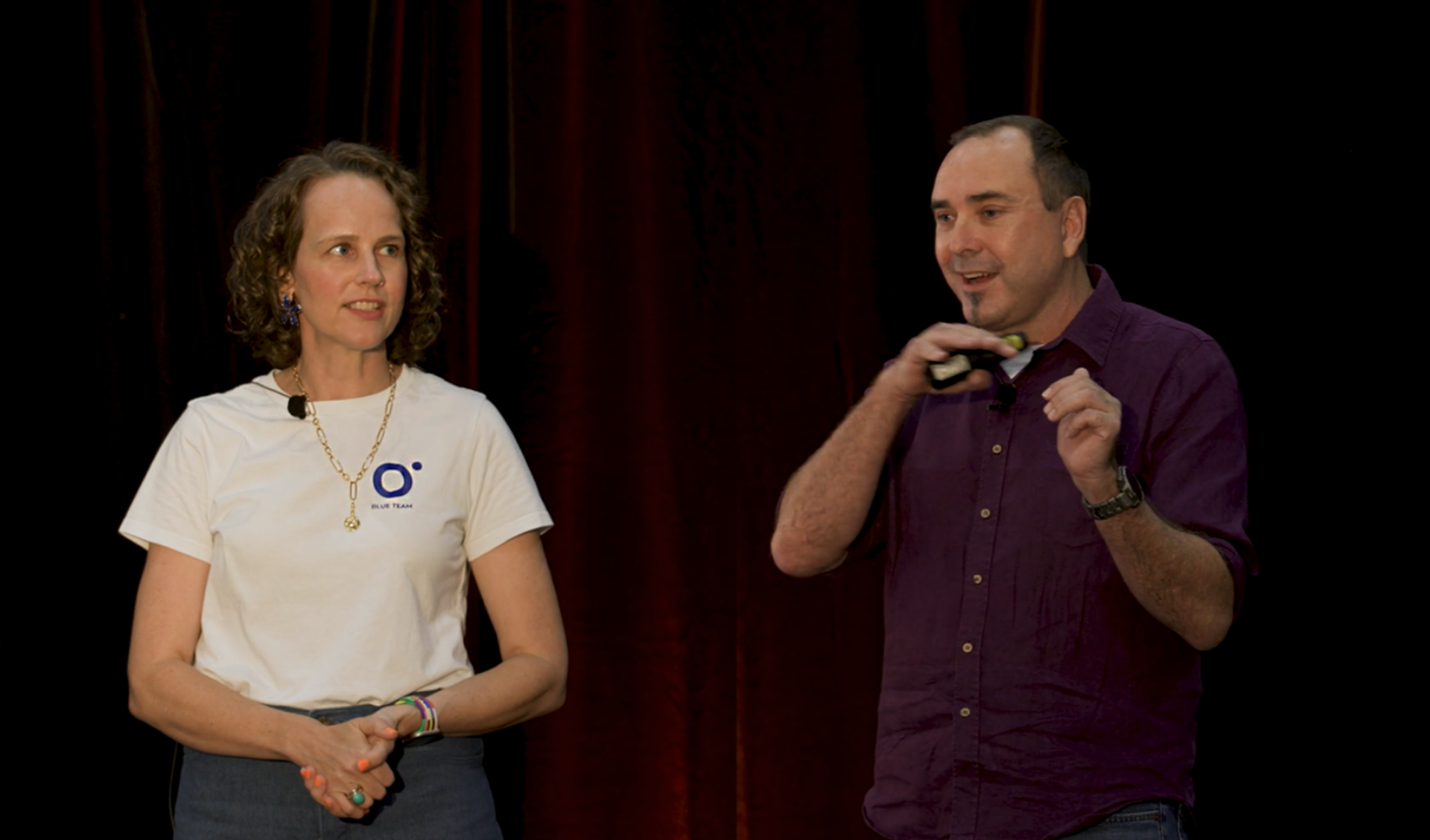
This piece is adapted from Paul and Bay's keynote at Digital Health Festival 2026, where they shared three real-world stories of legacy systems being unwound by agentic AI. The headline: the economics of "rip and replace" have just been rewritten. If your modernisation business case has been sitting on the shelf because it was too big, too slow, or too risky - it's time to take it down again.
(TL;DR)
- 79% of app modernisation projects fail. Of the $22.7 billion spent in 2025, roughly $18 billion was wasted.
- The "SaaS apocalypse" is real. Build-vs-buy is back on the table for almost everything.
- The Strangler Fig pattern is back, but now you can actually finish it. One of our utilities clients is genuinely shrinking SAP back to just finance and payroll. That wasn't possible 12 months ago.
- AI adoption isn't a training problem; it's a cultural one.
On our recent fully-agentic project, only 3 of 70 staff volunteered.
Why 79% of App Modernisation Projects Fail
The math ain’t mathing, and it ain’t pretty.
79% of app modernisation projects fail. Globally, organisations spent $22.7 billion on app modernisation in 2025, which means roughly $18 billion was set on fire. And those are just the failures that get reported. The dirty secret is that most "successful" modernisations succeed because someone noticed it was failing and redefined the success criteria mid-flight.
For decades, this meant if you were running an old mainframe app, you were pretty safe in thinking you’d be around for a while. The economics of replacement just didn't work. The systems were too tangled, the documentation too thin, the developers who understood the codebase were too few, and the risk too high.
That has changed profoundly in the last six months.
"Time and cost should no longer be the limiting factors in starting to replace your legacy systems."
- Bay McGovern
The new constraint has moved beyond engineering and into organisational appetite.
Copilot vs Agentic AI: The Three Modes of AI-Assisted Development
Before we get into the stories, a quick taxonomy. There are three modes of AI-assisted software development in the market right now, and they are not the same thing:
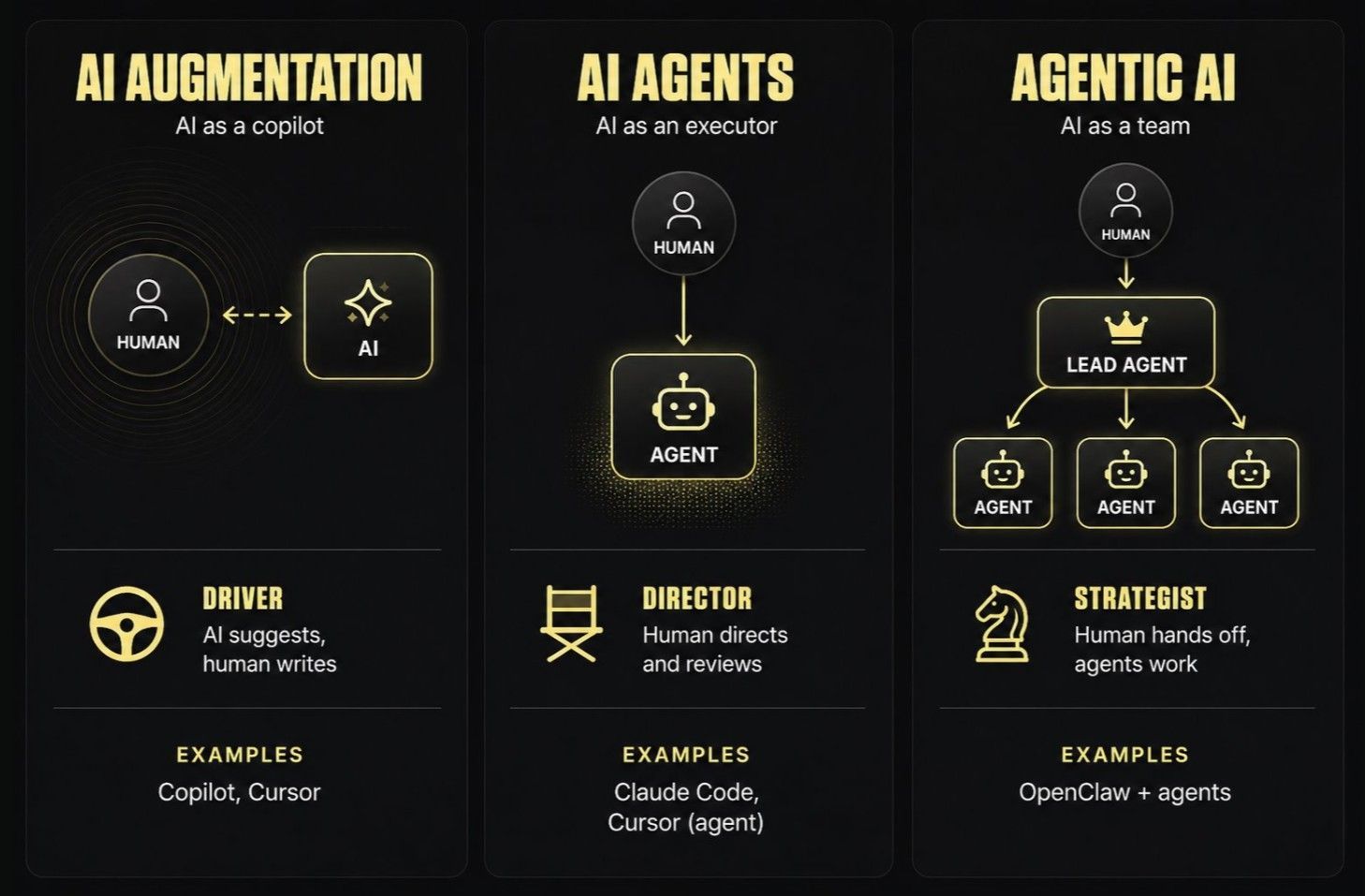
When we talk about "agentic AI modernisation," we mean the third category. The volume of work it produces is genuinely hard to wrap your head around. We've had projects where literally hundreds of agents run in parallel for an hour or two, and the output would have taken a traditional team months.
This is also why most enterprise teams are unprepared for it. They're still set up to manage Copilot.
How Agentic AI Cut a Mainframe Migration from $15M to $800K
A regional WA bank had been trying to peel itself off a parent bank's IBM mainframe for years. RPG on iSeries. Tentacles into every other system in the business with zero product documentation. The kind of project they couldn’t get a business case to stack up around.
The original estimate for the job:
- $15 million
- 18 months
- 3 teams of 5 x developers
A traditional consulting estimate. And as anyone who's been near a mainframe migration will tell you, almost certainly going to run over time and over budget.
Then agentic AI came on the scene, and the project was spearheaded by one developer using agentic tooling, who eventually pulled a small team around him as the project scaled.
The actual agentic AI outcome:
- ~$800k ($500k in labour, $300k in tokens)
- 3 months
These numbers represent roughly a 94% cost reduction and 80% time reduction versus the original quote. A real, regulated, mission-critical core banking platform, fully rebuilt with agentic AI.
Rebuilding Xamarin Apps with Agentic AI: From Crisis to Six Apps in Eight Weeks
About nine months ago, the CIO of an ASX-listed company called us in a panic. They had a major commercial deal closing in two weeks that required two mobile apps to be live in the App Store. The apps existed but they were written in Xamarin, and Apple and Google had stopped accepting Xamarin submissions. No app, no deal.
Each app had around 40 screens.
Phase one (9 months ago, AI-augmented mode):
- In 2 weeks: a minimum-viable native React Native shell was deployed to the App Store. Deal saved.
- Next 12 weeks: full native rebuild, screen by screen.
That was state-of-the-art AI-assisted delivery at the time.
Phase two (3 months ago, fully agentic mode):
Same kind of problem. Bigger remit. Six apps. Eight weeks total.
- Weeks 1–2: All six apps built as MVP iterations. Every screen, every core feature.
- Weeks 3–6: Polish, UI fixes, bug bash.
- Week 6: Handed to client for UAT.
That left us with two weeks spare. So, we used them to build a bonus proof-of-concept: migrating their Sitecore CMS off-prem into a headless setup on Strapi, with a Slack interface that lets a non-developer say "spin me up a new site with these brand colours from this reference URL" - and have it actually happen.
The shift between what was possible between phase one and phase two (same team, same client, six months apart) is the clearest signal we have that the operating model has changed.
Shrinking SAP with the Strangler Fig Pattern and Agentic AI
This is the one that genuinely surprises people. A regulated utilities client we've worked with for a couple of years has SAP wrapped through everything: HR, finance, payroll, asset management. A classic enterprise lock-in.
The cost of that lock-in? At one point they told us they paid $75,000 and waited three months to get a single field added to an SAP form.
Their goal was to claw functionality back in-house, incrementally, without a "big bang" replacement.
This is the classic “Strangler Fig Pattern” where you peel work away from the edges of a monolith, replace it with smaller modern services, and slowly shrink the core. The pattern has existed for 20+ years.
Solid concept, but it almost never worked.
The reason it failed historically was because teams would migrate a few edges, run out of budget, and stop. You'd end up with a worse system than you started with: the original monolith plus a half-built replacement that nobody wanted to own.
Agentic AI has changed the economics of the Strangler Fig. When edge replacements take days instead of quarters, you can actually finish.
That utilities client now has a credible plan to shrink SAP back to just finance and payroll. Twelve months ago that would have been laughed out of the room.
Build vs Buy: Has Agentic AI Killed the SaaS Argument?
If you can shrug off the old constraints of time and money and credibly rebuild a SaaS platform's functionality in weeks rather than years, what happens to the SaaS vendors?
We don't think every SaaS company is in trouble. But the build-vs-buy calculation has definitely flipped for a meaningful slice of the market.
At Patient Zero we've already done this internally: we've replaced our DocuSign subscription with a version we built and run ourselves. We've started looking hard at our CRM and a few other SaaS platforms in the same way.
We all know the traditional vendor pitch - "we've got all the functionality, you don't have to build a thing" - was always a polite fiction. Every business has their own needs; everyone customises. So, you weren't really buying a finished product, you were buying a starting point and locking yourself in. But now that agentic AI has kicked the door to building bespoke wide open…well that lock-in starts looking a lot like tech debt.
AI Adoption Isn't a Training Problem; It's a Culture Problem
You might not guess it, but the tech isn’t the most difficult part when trying to leverage AI tooling.
Kat Terrel, (formerly at GlaxoSmithKline, currently on the boards of several S&P 500 companies) described the journey her companies had been through. AI rollout after AI rollout all stalled. Every time, leadership assumed it was a training problem. So they’d bring in vendors, run more enablement, send people on courses.
But eventually they realised it was never a training problem. It was a culture problem.
In the US, the share of people who view AI positively dropped from ~90% to ~10% in the last twelve months. That collapse in trust is happening in the workforce that you need to actually adopt these tools.
Gartner is now reporting that over 75% of software engineering teams using AI are still operating in "augmented" mode (Copilot territory). Not because they don't have access to agentic tooling, but because the mindset shift hasn't happened.
Traditional Developer vs AI Orchestrator: Two Different Mindsets
It's worth contrasting the two profiles:
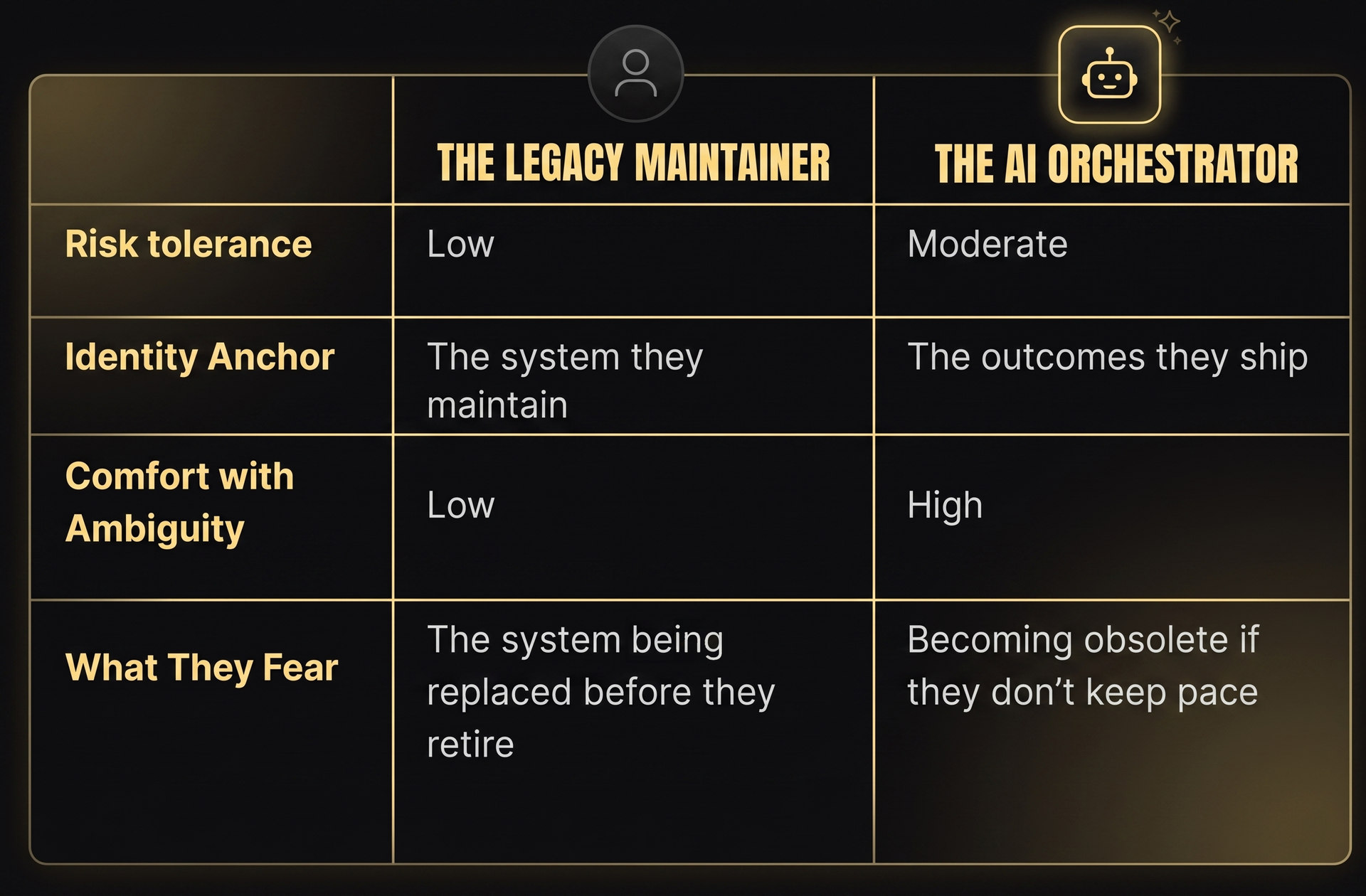
On our recent fully-agentic project at PZ, out of 70 staff (mostly software engineers, designers, and product owners), three people volunteered for the project. Three. So, we are seeing what the research is reflecting. The developer and the orchestrator don’t just have different skill sets. They have different worldviews. And the second one is rarer than you'd think.
Gartner predicts that by 2030 CIOs will need to fundamentally rethink IT org structures. We are talking major restructures, top-to-bottom redesigns of roles, teams, and remuneration models. The job of "developer" as we know it is going to look very different in a few short years.
Four Predictions: Open-Weight Models, Frontier Pricing, and the Next 18 Months in AI
A few things we think you can take to the bank (at varying levels of confidence).
1. Frontier Model Prices Are Going Up; Possibly by an Order of Magnitude.
OpenAI has raised roughly $200B for data centre buildout against $20–30B in revenue. These unit economics don't work at current token prices. Expect a meaningful price increase across all the closed frontier models within 12–18 months.
2. The Frontier Models Are Converging, and the Performance Gap Is Shrinking
Whenever Anthropic ships, Google and OpenAI ship a near-equivalent within weeks. The performance gap between top-tier closed models is shrinking. That's bad news for moats.
3. Chinese open-weight models are coming hard.
They're growing in capability fast, they're cheap to run, and they sidestep both the price increases and the sovereignty problem. As Scott Galloway has argued, the strategic play is to commoditise the layer that the US incumbents are betting on.
4. The "open-weight = insecure" argument is nonsense.
An open-weight model is as secure as the environment you run it in. Saying it's compromised because of where it was trained makes about as much sense as saying a book is spying on you because of where it was printed. Run them in your own infrastructure, with your own guardrails, and you've solved sovereignty and cost at the same time.
We think open-weight models will, eventually, win out - in roughly the same way Linux won the server room while everyone was watching the proprietary OS wars.
Key Takeaways
If you take nothing else from this:
- Stop using time and cost as reasons not to start. That excuse expired six months ago.
- Use the Strangler Fig pattern but powered by agentic AI. Build around the edges of the legacy system and let it shrink. This time, you can actually finish.
- Pick people for mindset, not just skill. The best traditional developer isn't always the right person to orchestrate agentic work. Choose for risk tolerance, adaptability, and outcome-orientation.
- Take open-weight models seriously. Especially if cost or sovereignty are pressures on your business and if you're in regulated industries in Australia, they are.
The next 12 months are going to separate the enterprises that take this seriously from the ones that don't. We know which side we're on.
Modernise Legacy Systems Without the 79% Failure Rate
Patient Zero helps Australian enterprises move from "stalled legacy" to "sovereign capability" without the 79% failure rate.
- Replace the unreplaceable. Use agentic AI and the Strangler Fig pattern to retire legacy systems in months, not years. → Enterprise App Modernisation & Legacy Migration
- Rescue what's already off the rails. If a modernisation programme has already stalled, we specialise in getting them moving again. → Project Rescue & Vendor Transition
- Build agentic capability in-house. Don't just buy outcomes, own the muscle. → AI & Emerging Tech and Embedded Teams.
About The Authors

Bay McGovern is a Principal Product Owner at Patient Zero, where she herds cats, defines roadmaps, and passes exams on sheer intuition.
With nearly 20 years in tech and 11 years specialising in Agile delivery, Bay has seen every flavour of "Scrum-ish" there is.
A WIICTA Finalist for Achievement, she is known for cutting through the methodology noise to focus on what actually ships product.
Learn more about Bay and her full journey from Vancouver to Brisbane in Meet Bay McGovern.

Paul Seymour is a Co-founder and Co-CEO at
Patient Zero though he remains a problematic employee who prefers shared leadership, mostly for the joy of arguing with diverse viewpoints.
With more than two decades in enterprise software, he focuses on the intersection of agentic AI, regulated industries, and the economics of sovereign engineering.
Paul relaxes by spending quality time with his excavator, playing piano, and flying his gyrocopter.
Share This Post
Get In Touch
Recent Posts