Sovereignty, AI Agents, and the End of SaaS: The CIO’s Guide to 2026

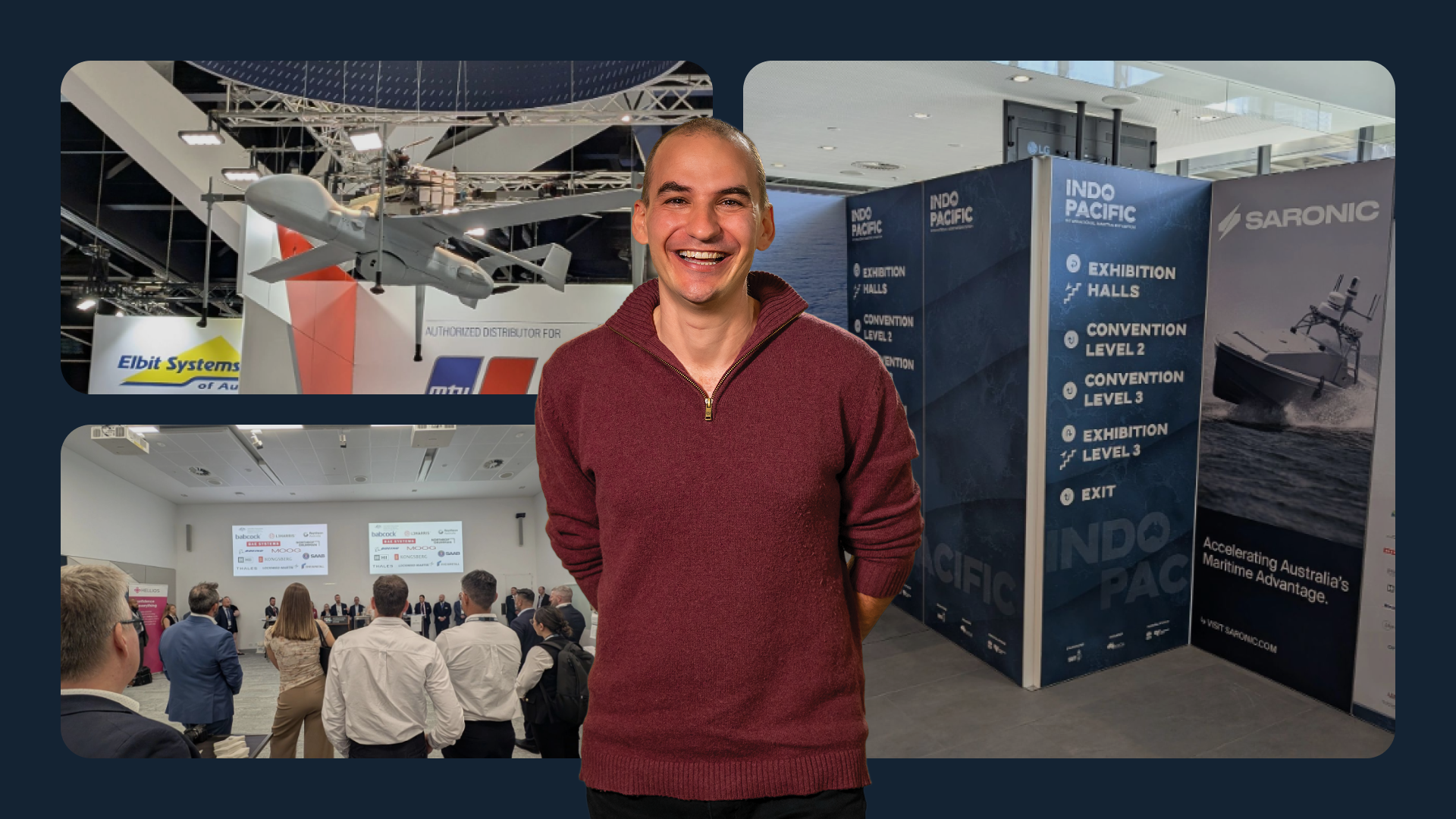
To stay ahead of the curve, Patient Zero maintains a relentless pace of global engagement.
Having recently returned from the world’s premier technology stages, including GITEX Global in the UAE, CES in the US, Web Summit in Europe, and speaking on stage at the Gartner Symposium, our team has its finger on the pulse of the Australian and International market.
We combine this global intelligence with deep, ongoing dialogue with analysts and customers across Australia to ensure our insights are solving current and pressing problems for our customers.
The consensus?
The playbook that worked for the last decade is now obsolete. We are witnessing a fundamental inversion of the rules of engagement.
- Economics: From "Buy vs. Build" → Build vs. Buy
- Geopolitics: From "Global Efficiency" → Sovereign Borders
- Workforce: From "Specialist Coder" → Creative Orchestrator
- Infrastructure: From "Cloud First" → Cloud Smart
- Intelligence: From "Black Box Rentals" → Open Weight Assets
Here is our executive briefing on the 5 macro trends in technology defining 2026.
Trend 1: The Death of SaaS: A New "Build vs. Buy" Equation
The Trend: From "Buy vs. Build" → “Build vs. Buy”
For the last decade, "Buy" was the default strategy to reduce risk. However, the rise of Agentic AI has fundamentally altered the economics of custom software development.
The "Cost of Code" Collapse
We are observing a dramatic collapse in the cost of production, with early 2026 Agentic workflows demonstrating speed improvements of up to 60x. When code becomes this cheap to produce, the premium paid for pre-packaged software becomes harder to justify.
Market Validation: The SaaS Correction
This shift is already being priced into public markets. A prime example is Salesforce. Despite the high-profile launch of "Agentforce," the company saw its stock tumble nearly 25% over the last year.
Why?
Because the market is beginning to price in the "Custom Software Development Option." Investors are realising that Agentic AI eliminates the need for the expensive, UI-heavy interfaces that justify seat-based pricing. When an Agent can interact directly with its data, the premium for a "User Interface" evaporates.
The "Sovereignty Gap": Owning vs. Renting
This shift exposes the structural vulnerabilities of the traditional SaaS model: rigid contracts, feature bloat, and most critically, the Sovereignty Gap.
When you "Buy" SaaS, you are renting a row in someone else's database. Regardless of "local residency" promises, your data is often commingled in multi-tenant architectures subject to foreign jurisdiction (e.g., the US CLOUD Act), leaving you with zero true ownership.
The Strategic Reality: Bespoke Software at SaaS Prices
Organisations are realising that with AI, they can build bespoke, data-sovereign tools tailored exactly to their workflows in weeks rather than months, or even years.
The market is beginning to price this in. Why rent a generic "Black Box" that exposes your data to foreign risk, when you can build a
Proprietary Asset
that you own outright; data code, and IP with zero recurring license fees?
Trend 2: Digital Sovereignty & The Risk of Foreign Jurisdiction
The Trend: From "Global Efficiency" → Sovereign Borders
As deglobalisation accelerates and the "Great Power Competition" between the US and China intensifies, we advise customers to treat their digital products as a Sovereign Asset Class.
The "Kill Switch" Risk: Foreign Jurisdiction Liabilities
We have moved from an era of global efficiency to an era of security. Relying entirely on software hosted in US or Chinese jurisdictions introduces an existential risk: your intelligence capability can be sanctioned, throttled, or cut off overnight due to geopolitical disputes.
This is not a theoretical risk. In June 2025, we witnessed a digital "hard cut" in Southeast Asia when Thailand's regulator (NBTC) ordered telcos to sever internet links to Cambodia amidst rising border tensions. Whether the justification is fighting cybercrime or geopolitical leverage, the result is the same: reliance on cross-border connectivity leaves your digital lifeline in the hands of foreign regulators.
Why Residency is Not Enough: The Case for Model Sovereignty
It is no longer sufficient to just store data locally (Data Residency). Organisations must now possess
Model Sovereignty, the ability to run the inference engine on your own infrastructure without a single packet leaving the legal jurisdiction.
Trend 3: Future of Engineering: From "Specialist Coder" to "AI Orchestrator"
The Trend: From "Specialist Coder" → Creative Orchestrator
We are witnessing a fundamental break in the evolution of software development. While AI accelerates every technical field, software development is moving at a velocity that other industries can't match.
The reason is structural: in our world, the tool and the product are identical. This creates a recursive loop; we aren't just driving the car faster, we are rebuilding the engine while we drive.
The "Dogfooding" Imperative: Bootstrapping AGI
This velocity is further compounded by the race to AGI. The labs building these models have a strategic imperative to use today's AI to write the infrastructure for tomorrow's AGI.
This is not just about future AGI; it explains why today's models are so capable. Take Anthropic's Claude. It is widely regarded as the premier coding model not by accident, but by design. Its developers explicitly use Claude to code Claude.
This creates the ultimate feedback loop. If the model writes buggy code or hallucinates a library, the engineer building the next version feels the pain immediately.
Beyond quality, this is about necessity. We are hitting the "Complexity Wall." The systems required to train the next generation of models are becoming too vast for human engineers to manage manually. To reach AGI, we need code written at a speed and complexity that only an AI can generate.
The Evolution of Value: The Rise of the Creative Orchestrator
For decades, value was defined by deep specialisation. Then came the "Full Stack" developer, a specialist generalist. Now, 2026 demands the "Creative Orchestrator."
The rise of AI Agents is causing friction for the traditional "Specialist Developer" who feels the need to hand-craft every line. The future belongs to those with high cognitive creativity, engineers capable of wielding multiple AI agents concurrently to solve problems, rather than just writing syntax.
The Developer Mindset
Feels the need to hand-craft every line, deeply suspicious of what they didn't build themselves.
The Engineer Mindset
Like a bridge builder, they trust the steel and components that already exist. They focus on the structural integrity of the whole, not the chemical composition of the bolt.
The "PhD-Level Junior": Why AI Needs Human Orchestration
There is a dangerous misconception that AI writes perfect code automatically. Our experience deploying Agentic Swarms proves that AI rises only to the level of the prompter. Without a skilled Orchestrator, an AI Agent is simply a "PhD-level Junior": infinite encyclopaedic knowledge, but zero wisdom or context.
The Silent Accumulation of Liability
Left unsupervised, this "Junior" creates a unique form of technical debt: Spaghetti Code at Scale. Because AI prioritises "making it run" over structural integrity or security, it frequently generates code that passes unit tests but is riddled with hidden vulnerabilities.
We are seeing a rise in "brute force" solutions; bloated functions, unoptimised queries, and insecure dependencies, that work in isolation but degrade the performance and security of the broader system. Without a skilled Orchestrator to enforce standards, you may be building faster but you are compounding your security risk and maintenance costs at a velocity humans cannot match.
Trend 4: Cloud Smart Strategy & The Rise of Repatriation
The Trend: From "Cloud First" → Cloud Smart
For the last decade, the CIO mantra was simple: shut down data centres and move everything to hyperscalers (AWS, Azure, GCP). In 2026, customers are moving to "Cloud Smart" (or Cloud Where Possible / Cloud-Right).
The Economic Correction: Escaping the "Cloud Tax"
The promise of Cloud was cost reduction, but the reality for many at scale has been cost explosion. The "rent" paid to hyperscalers, especially for data egress and always-on compute, often exceeds the cost of owning the infrastructure. We are seeing a wave of "Repatriation," where predictable workloads are moving back to private clouds or bare metal.
In 2023, 37signals (makers of Basecamp) executed a full cloud exit after realising that for a mid-sized company with stable growth, "renting computers is a bad deal."
They debunked a critical industry myth: that the Cloud is "simpler" and therefore requires a smaller team to manage. Their experience proved that running major services in the cloud is just as complex as running them on-premise; the promised savings in operations labour never materialised.
The result? By late 2024, they confirmed the move had slashed their infrastructure spend, putting them on track to save $10 million USD over five years. They proved that if your growth is predictable, owning your assets is mathematically superior to renting them.
Residency vs. Sovereignty: The US CLOUD Act Risk
While hyperscalers offer "Residency" (it sits on Australian soil), true Tier 1 Sovereignty (immune to foreign jurisdiction) often requires air-gapped infrastructure to eliminate exposure to regulations like the US CLOUD Act.
The "Microsoft Ireland" Precedent
The CLOUD Act (2018) was not a proactive measure; it was a reactive weapon. It was born from the United States v. Microsoft Corp case, where the FBI demanded emails from a customer suspected of drug trafficking. Microsoft successfully refused, arguing the data was physically stored on servers in Dublin, Ireland, and therefore outside US jurisdiction.
Panic ensued at the DOJ. Realising that "Data Residency" was a successful legal shield, Congress passed the CLOUD Act to crush it. The law explicitly states that US tech companies must hand over data regardless of where it is physically stored.
The Post-American Drift
This loss of trust was the dominant theme at the 2025 Web Summit in Europe. The industry consensus is shifting away from US-controlled "Black Boxes" toward High-Performance Open Source (like DeepSeek). The goal is no longer just "better features", it is the ability to run the model on your own metal, where neither Washington nor Beijing can touch the off switch.
Trend 5: Enterprise AI Strategy: Open Source, SLMs & The Sovereign Stack
The Trend: From "Black Box Rentals" → Open Weight Assets
If Sovereign AI is the goal, Open Source (Open Weights) LLMs are the vehicle.
DeepSeek vs. GPT-4: The Performance Gap Has Closed
The delta between proprietary "Black Box" models (GPT) and top-tier Open Weight models (DeepSeek, Llama, Mistral, Qwen) has collapsed. "Good enough" is now "Excellent," rendering the premium for closed models difficult to justify against the strategic advantage of ownership.
The Asset Mindset: Treating AI as Proprietary IP
In a low-trust geopolitical environment, you cannot build critical infrastructure on a model you cannot inspect. Open Source allows for deep code audits which ensures no hidden biases or backdoors exist. When you fine-tune an Open Source model on your own secure infrastructure, you are building a Proprietary Asset that adds value to your balance sheet and is immune to external price hikes or policy changes.
The Rise of SLMs: Speed, Sovereignty & Specialisation
The era of "One Giant Model to Rule Them All" is ending. We are witnessing a migration from massive LLMs (Large Language Models) to SLMs (Small Language Models).
Why burn a forest to light a cigarette? For 90% of enterprise tasks, such as classifying documents, routing tickets, or summarising meetings, a trillion-parameter model is overkill. It is slow, expensive, and difficult to host.
The "Distillation" Breakthrough
The game changed in early 2025 with the popularisation of "Model Distillation" (pioneered at scale by DeepSeek). This technique involves using a massive "Teacher" model to train a tiny "Student" model. The result is that you get the reasoning quality of a giant brain compressed into a model small enough to run on a laptop.
The Strategic Advantage
Domain Density The real power of SLMs is Specialisation. Instead of a generic model that "kind of" knows everything, you can fine-tune a small model (e.g. Llama-8B) exclusively on your specific reality. This could be your COBOL legacy code, your unique legal contracts, or your proprietary engineering schematics.
Speed: They run at lightning velocity (low latency) enabling real-time voice and agentic flows.
Cost: Inference costs drop by 90-99% compared to calling a frontier API.
Privacy: They are small enough to run entirely "at the Edge" (on a secure on-prem server or even a user's device) ensuring no data ever leaves the building.
The "AT&T" Proof Point
You don't need a trillion parameters to be smart; you just need to be focused.
In a defining case study for 2026, AT&T (a Fortune 50 giant managing petabytes of sensitive data) migrated core analytics workflows from massive frontier models to Mistral's SLMs.
The task was industrial-scale sentiment analysis: processing millions of customer support transcripts to detect billing errors and churn risk. They realised that a model doesn't need to know the capital of Iceland to recognise a billing complaint, it just needs to know AT&T.
The Results:
- Speed: They slashed call centre processing times by 84%, reducing a 15-hour workload to just 4.5 hours.
- Cost: Chief Data Officer Andy Markus confirmed a 90% reduction in costs compared to commercial large-scale models.
This destroys the myth that 'Bigger is Better.' By processing 5 million calls locally, AT&T proved that in 2026, competitive advantage doesn't come from having the largest model; it comes from having the most efficient one.
The Bottom Line: Owning Your Future
The barriers to entry have collapsed. Custom software, SLMs, and sovereign hosting have never been cheaper, faster, or of higher quality. 2026 is shaping up to be a defining year where technical constraints are no longer the bottleneck. The only thing that now hinders an organisation is its own agility and speed to adapt to this new reality.
Turn Strategy into Sovereignty
Patient Zero exists to help you bridge this gap. Here is how we map these trends to your roadmap:
- The Strategy: Don't get locked into a "Black Box." Build your own proprietary assets with Custom Software Development.
- The Workforce: Need "Orchestrators" not just coders? Augment your capability with our Embedded Software Teams.
- The Infrastructure: Stop paying the "Cloud Tax." Refactor your estate for efficiency and security with Application Modernisation
About the Author
Demelza Green is the Co-CEO of Patient Zero and 10,000 Spoons. A Women in Digital UX Leader of the Year and ARN Innovation Award winner, she sits at the intersection of human experience and technical reality.
Fresh from the global conference circuit (CES, GITEX, Web Summit), she is focused on helping Australian enterprise software leaders navigate the shift from "Global Efficiency" to "Sovereign Resilience."
Her goal? To help Australian enterprises stop renting their future and start building it.
Disclaimer: This article reflects the technical reality as of January 2026. In this industry, the shelf life of information is measured in weeks, not months. Any advice, tool, or benchmark mentioned here may have already evolved or been replaced by the time you read this.
Related Content
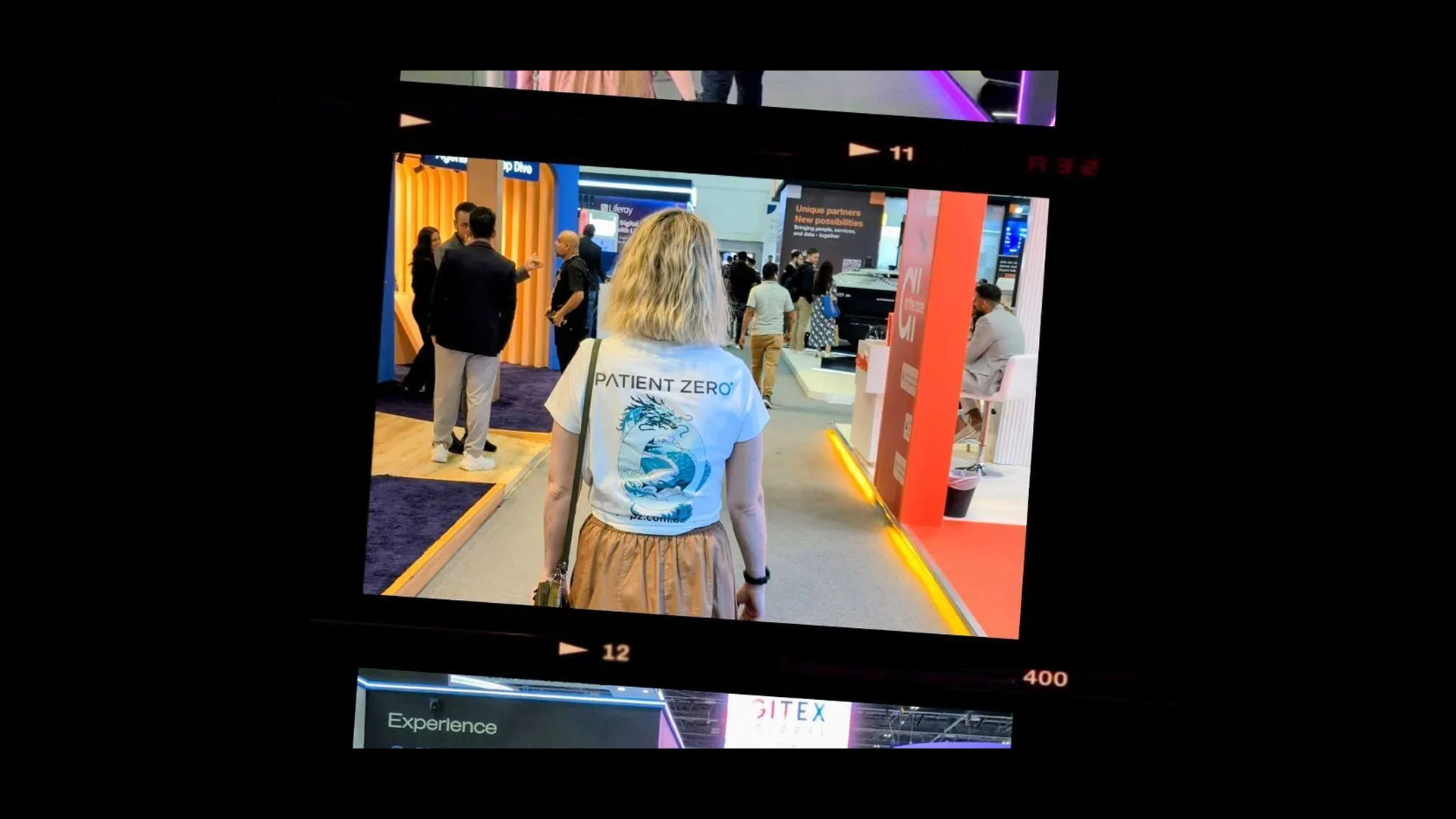
GITEX Global Review: The Robots Are Here (And Australia Isn't)
If you haven’t heard of
GITEX Global before, don’t worry, neither had I until about a year ago when their digital advertising game levelled up and plastered itself across all 50 of my browser tabs.

The Joy of Faking It: Synthetic Data & Legacy Modernisation
PZ teams love green-field development, but in some ways this is playing the software development game on “easy” mode – existing systems with years of features, large user bases and lots of existing data are often more challenging.
Share This Post
Get In Touch
Recent Posts